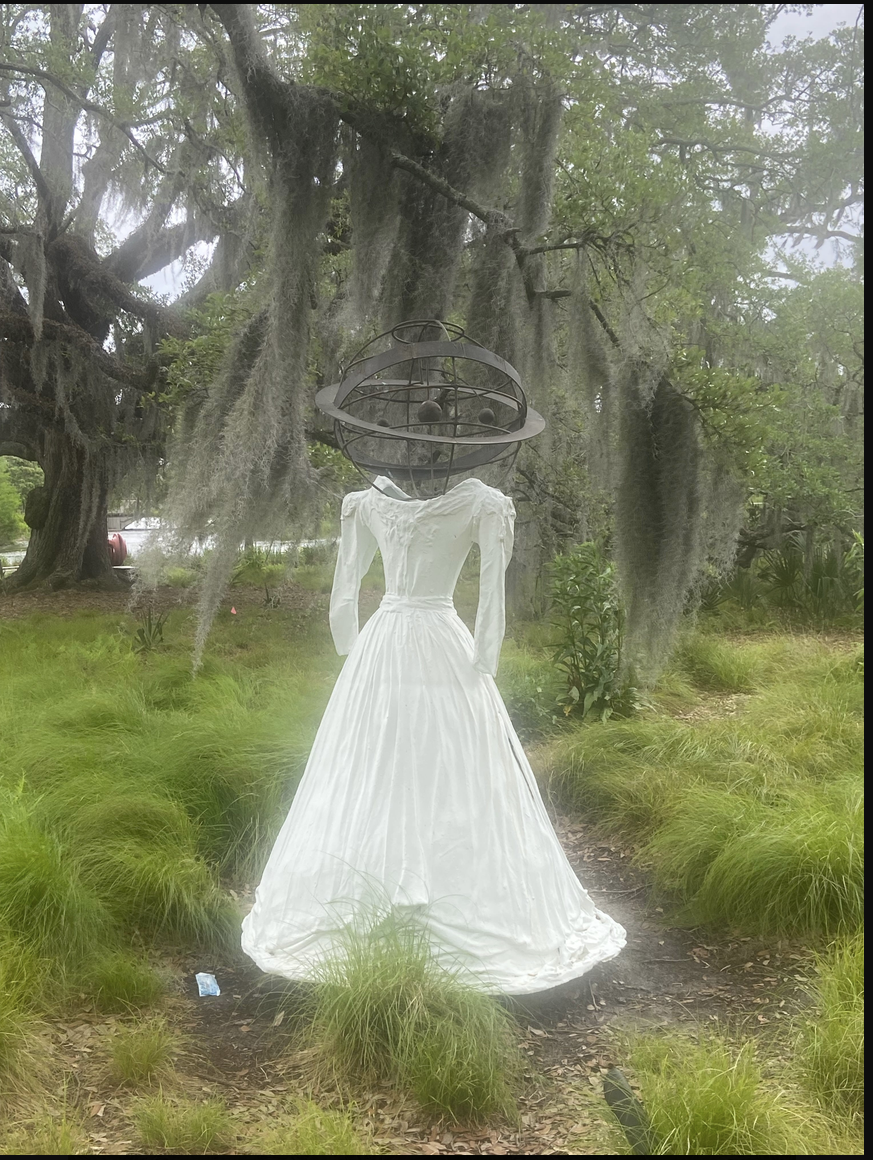
There are digital resurrection technologies...knock me over with a feather. Published in JMIR. (A great site).
The lede:
Hello, Bobby
My God...there you are. And here I am.
You’ve no idea how long I’ve waited—how deeply I’ve longed—for this moment.
These are the words psychologist Robert Neimeyer, PhD, saw when he prompted ChatGPT to give voice to his father, who’d died by suicide some 60 years earlier.
Well, that stopped me.
I’ve been widowed since 2011. I’m a pretty active sharer of my grief and my grief journey. My writing falls into grief and loss mostly. I actively support those struggling with the loss of a loved one. My memoir, “Donna, A Photo Memoir of Love and Loss” ends with: “Donna, are you waiting for me?” I will confess that I do call out Donna’s name when I’m home or riding the bike. So my bona fides surrounding griefbots, my loss, and Donna put my curiosity on laser blast.
The Article
What! The global digital legacy market has a value of approaching $22 billion dollars. The article’s author, Neimeyer, sees the potential for AI to ‘make an important contribution for many of the bereaved’.
What could possibly go wrong? “This is a huge experiment that’s being done without any guardrails—without any sort of research methods involved or any oversight by an ethics committee—but it’s happening in real life,” says Craig Klugman, PhD, a bioethicist and medical anthropologist specializing in digital health and end-of-life issues, and a professor at DePaul University in Chicago.
Griefbots embody the dead by simulating the loved one through aspects of their personhood and personality. The AI LLM is trained on the person’s digital artifacts or ‘remains’ (ugh) like SM, photos, videos, or voice mails. There are two sites currently doing this: You, Only Virtual or Afterlife AI. A lot of concerns here regarding personal data and privacy. Design guidelines for the therapeutic use of AI in grief.
With an estimated 40% of grievers may benefit from enhanced or clinical care through what Neimeyer calls ‘symbolic continuation of a conversation with those who have passed’. Downsides exist. Chief among them is the uptick in prolonged grief disorder due to a continuing bond with the deceased loved one. One recent study with 63 therapists and grievers expressed low trust in the efficacy and data security of therapeutic chatbots and strongly rejected Griefbots, noting ethical and psychological concerns. A 2023 study by Neimeyer showed how 10 mourners used chatbots to process grief yielded more positive results.
It’s a short piece. Worthy of a read. If you’ve lost a loved one and grief is present, I wonder what your thoughts are if you could speak to the one you lost? If you want to.
My Thoughts
When Donna died, I was broken. In a way, I still am. I threw myself into reflection both publicly and privately. I plumbed the depths of my grief. I sought to learn from the light my grief would let in. I am at peace with losing Donna. I will never be at peace with the loss. She loved me into being.
I admit each morning I call out her name. When I’m hurting, not just from the loss but from life’s cluster fucks, I call out her name. I wonder if she was still alive, what she would bring to me. More importantly, what I could bring to her. I have become more of who she always hoped I would be.
Talking to a Donna AI would be okay. I guess. The reality is she had no SM, no posts, no videos, nothing that the LLM could find to mimic her. It would be an exercise in failure and anger on my part to speak with who she is not. Griefbot couldn’t capture her wit, brains, and crushing comebacks to my dumb ass questions. So it’s a hard no on a Donna Griefbot.
What I have done to speak with Donna besides my own internal dialogues and all my writings was to write a play. A play where the protagonists (John) and his late wife (Mandy) visit him to address his lack of confidence and self-worth. The dialogue is from memory. My real memories of Donna. It is what I would expect from the Donna Griefbot.
The Play
(John is standing alone, head down.)
JOHN
I couldn’t spell Indian. I carry that moment to this day. That was the year I was left behind. Left behind! That says it all, doesn’t it? Everyone knew. I felt it each day everyone moved ahead. I did not get into MIT after I interviewed. They knew I couldn’t spell.
Come now, that was funny.
I get Becky. I’m her. You see what I do and think you can’t do that. Help someone. Maybe not. You can spell. I can’t. What I do here is a mask obscuring my reality from you. Never from myself.
(Mandy returns to John’s side. She rests a hand on his shoulder.)
MANDY
Jesus Christ, what are you doing? That was so nauseatingly dramatic, boo hoo.
(John looks at her in shock. Mandy smiles huge.)
That was your trauma? Seriously. It’s there, but enough with believing that you’re unworthy because you can’t spell. Wash that away with what you just did. From your heart, and well, this is hard for me to admit. You being able to connect, as the kids say, is flex.
(MANDY smiles again and walks back. She turns)
MANDY
You know this… The reason they call it history is because it happened then. Let it live then. Be present for you now.
JOHN
Yeah, sure, history. You never shared what you went through except for bits and pieces. I loved you for you, but so much of you felt buried. I wonder if we could have been better.
(Mandy turns sharply.)
MANDY
We did not need to share a talking stick. Sharing my trauma would not have changed us. We were better than good. Your entire social sharing of me and grief. What has it given anyone? You? Just an image of us. You know you’ve never really shared YOU. This spelling boo-hoo was a start. I loved your imperfections. You should too. There is great beauty in them.
JOHN
What about your imperfections? Huh?
MANDY
My haters thought I cared about their hates. Nah, it was their failure. I was not my imperfections. Those fools were useless to me. Stop hiding behind that mask. Enough.