Words really matter
I know this not from the calendar or phone. It’s the anxiety that begins to invade me like kudzu on the side of a Georgia highway. August 7, 2011 was the day Donna passed away in hospice.
Every year since 2011, August does that. Every August, I react in my solitude. Every August, I share a memory and wait 12 months more. You know: lather, rinse, repeat.
I was just looking back at some posts and podcasts I did in olden times. I saw this one, and it tracked. No one read it then, so hope falls external.
Parting Shot
Angela Chen, writing for The Paris Review, examines “the words that bookend a life.” Specifically, she examines the West’s concept of famous last words and the East, where premeditated death poems (jisei) are a long tradition. The essay is “Parting Shot.” Great title, huh?
Chen points out that the last words of Jesus on the cross—“Father, into Thy hands I commend my spirit”—ushered in the entire exercise during the Enlightenment, where one and all were expected to offer up brilliance and insight minutes prior to dying.
This is in direct counterpoint to what was expected in Japan. Elderly samurai and those in the upper class were spurred to compose a death poem that demanded time and consideration. It would be shared for criticism and input. This made sudden death a real fear.
“...Narushima Chuhachiro, who started drafting death poems at fifty lest he die unprepared. Chuhachiro sent this one to his poetry teacher: ‘For eighty years and more, by the grace of my sovereign / and my parents, I have lived / with a tranquil heart / between the flowers and the moon.’”
The teacher’s response: “When you reach age ninety, correct the first line.”
Donna’s Parting Words
Donna was in hospice for her last 18 days. I would be there daily and at night. One of the attending staff said that being present at the time of death is rare. I wanted to be there less for her last words than so she would not be alone. I was home walking the dog and got a call to hurry back. The cab driver went the wrong way, and I was not there for her last words—or otherwise. My guilt is on blast during August.
About 10 days prior to August 7, she kind of had some last words.
Her dementia was getting worse, and in the evenings it was acute, exacerbated by sundown syndrome. She became agitated, irritable, and demanding—losing her glasses while they were on top of her head; yelling at the staff if I wasn’t there. If I were at home, they’d call me from her phone since she couldn’t work the screen; then she’d lace into me about how I ruined her phone or locked it.
“Now would be a good time to have end-of-life discussions with her,” the hospice rabbi and social worker said. “What does she want for her funeral? What are her regrets? Did she find joy in her life?”
Joy? I failed her. All I could do was think of that.
I hesitated for a day. Then, the next afternoon, alone in the room with Donna, I looked at her in the bed and said, “Donna, perhaps you want to talk about your funeral.”
She looked over at me and said, “Don’t be a maudlin pussy.”
Then she rolled onto her side and fell asleep.
She so got me... I laughed at her wisdom there. Today, all these years later, I realize she was smart AF and I totally ignored her advice. I am a MAUDLIN PUSSY to the nth degree. Though this year is different. (I will talk about that in another post.)
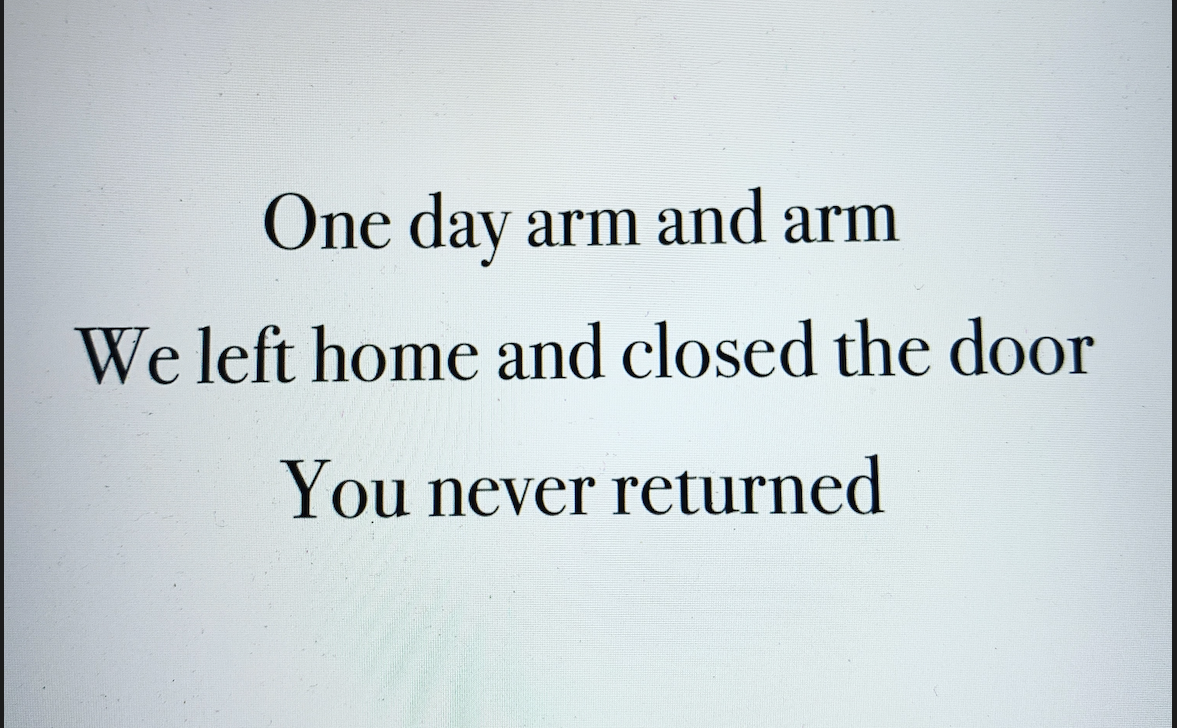
As I read Chen’s article and consider last words vs. death poems, I lean toward the poem. I see my blog as my death poems, albeit unread long-form. Though I would think of it in terms of a meandering suicide note. To that point of poem... this.
Finding Meaning in the Face of Death
Emily Esfahani Smith, writing in The Atlantic from her book The Power of Meaning, reviews the work of psychiatrist William Breitbart, chairman of the Department of Psychiatry and Behavioral Sciences at Memorial Sloan Kettering. The question top of mind when given a diagnosis of terminal illness is less about when I will die or how much pain; it is about what makes life meaningful—“meaning that cannot be destroyed by death.”
Esfahani Smith presents recent data addressing that meaningful lives are demonstrated because of three factors:
My existence is valued by others
I am driven by a sense of purpose or important life goals
I see my path to this point as coherent and integrated
“Psychologists and philosophers say that the path to meaning lies in connecting and contributing to something that is bigger than the self, like family, country, or God.”
Breitbart wanted to help patients build meaning and reduce suicidal ideation. His work was to create an eight-session group therapy program of six to eight cancer patients. Each session was structured around set questions that the group were asked. In the first session, participants were asked about moments or experiences that were meaningful. In the second session, patients responded to “Who am I?” In the final session, they were asked what part of them would go on living after death.
Breitbart went on to perform three randomized, controlled experiments on meaning-centered psychotherapy. His results found this work was transformative: patients’ attitudes toward life and death changed, with less hopelessness and anxiety about death. Spiritual wellbeing improved.
Breitbart notes that the time between diagnosis and death is an opportunity for “extraordinary growth.”
Two observations from my world (at that time).
After Donna died, the entire world I lived in lost most of its meaning and purpose. Most of that loss is directly related to Donna, but a lot of it is to do with my failure to find work or find what I wanted. I live with the sense this is the end. I’ve exhausted all the meaning and purpose in my life. Right now, I vacillate between “oh fuck” and “there is something here to find and uncover.”
My second thought is that Breitbart is right: there is extraordinary growth between diagnosis and death, particularly when you are a caregiver for someone dying. And that growth extends well beyond the death, through the experience of grief and the role it plays in knowledge acquisition and understanding of one’s emotions and life.
Since the original post, I began volunteering as a crisis counselor. Lots of meaning and purpose there. Too bad I don’t see it myself.